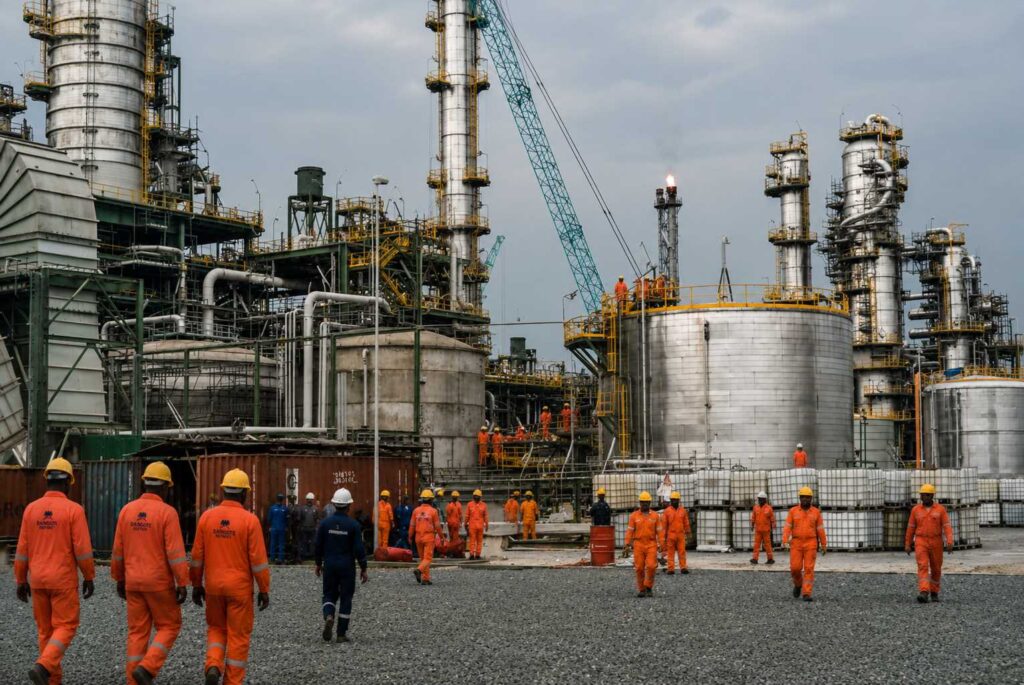
Dangote Petroleum Refinery has increased its petrol gantry price from ₦1,185 to ₦1,200 per litre, effective Wednesday, August 26, 2026, marking its second upward adjustment in less than a week as international crude prices continue to ease.
The latest ₦15 increase follows a ₦20 adjustment on August 21, when the refinery raised its petrol price from ₦1,165 to ₦1,185 per litre. The two increases have therefore added ₦35 to the refinery’s gantry price in five days.
The latest adjustment was communicated to customers and trading partners by Dangote Petroleum Refinery and Petrochemicals. Alongside the gantry price, the refinery raised its coastal PMS price from ₦1,562,265 to ₦1,582,380 per metric tonne, an increase of ₦20,115.
The timing of the increase is notable because global oil prices have been moving in the opposite direction. Brent crude has fallen by nearly $9 per barrel over the past seven days, while renewed efforts involving Iran and Oman to reopen the Strait of Hormuz have reduced some of the supply concerns that had pushed oil prices higher.
However, the decline in crude prices does not automatically translate into an equivalent reduction in the price of refined petrol. Refinery pricing is affected by several factors beyond the crude benchmark, including the cost of obtaining crude, freight, insurance, financing, exchange rates and other operating expenses. Dangote has not publicly stated that the latest ₦15 adjustment was caused by any single factor.
The latest increase also comes at a time when Dangote Refinery has become an increasingly important supplier to Nigeria’s downstream market. The refinery’s growing output has contributed to a sharp increase in Nigeria’s petroleum-product exports, with the country’s seaborne product shipments averaging 561,000 barrels per day in the second quarter of 2026, according to the US Energy Information Administration.
For fuel marketers, the immediate issue is the replacement cost of petrol. A higher refinery price can put pressure on depot and retail prices if other market costs do not fall enough to offset the increase. The new Dangote gantry price is also above some recently monitored Lagos depot prices, meaning the effect on pump prices will depend partly on how other suppliers and marketers adjust their own prices.
The development highlights the changing dynamics of Nigeria’s deregulated downstream petroleum market. Local refining has reduced the country’s dependence on imported finished petrol, but domestic pump prices can still respond to movements in international oil markets and the wider costs involved in sourcing and distributing petroleum products.
For consumers and businesses, the key question now is whether the latest increase will be followed by further adjustments or whether a sustained decline in international crude prices will eventually create room for lower petrol prices. For now, Dangote Refinery’s latest move points to continued volatility in Nigeria’s fuel market.