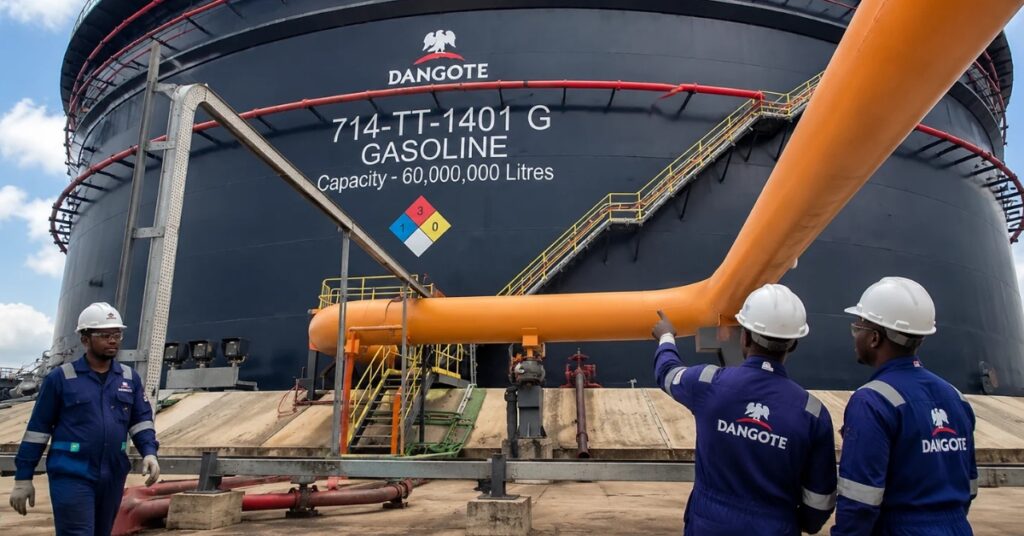

Walk through any busy commercial street, market, or shopping district and you’ll notice something fascinating. Two small businesses may sell similar products, serve the same community, and operate under the same economic conditions, yet their journeys can be remarkably different.
One business is thriving. Customers keep coming back, revenue grows steadily, and the owner is thinking about hiring more staff, expanding into new markets, or opening another location. The business has moved beyond simply surviving—it is building a foundation for long-term success.
Just a few doors away, another business is fighting a different battle. Sales rise and fall unpredictably, cash flow is constantly under pressure, and the owner is still responsible for almost every aspect of the business. Despite years of hard work, the business seems unable to move to the next level.
Why does this happen?
Small and medium-sized enterprises (SMEs) are the backbone of economies around the world. They account for the vast majority of businesses and create a significant share of private-sector jobs, making their growth essential for innovation, employment, and economic development. Yet many never reach their full potential because they struggle to overcome the barriers that prevent them from scaling.
It’s tempting to blame inflation, limited access to finance, intense competition, or changing customer behaviour. These challenges are real, and they affect businesses across industries. However, they don’t fully explain why two businesses facing similar circumstances can achieve very different outcomes.
The answer is often found in the decisions business owners make every day.
Growth is rarely the result of one brilliant idea, a single investment, or a lucky break. More often, it is the outcome of consistent decisions—understanding customers, managing finances with discipline, building reliable systems, developing capable people, and adapting as markets evolve. Over time, these decisions compound. Some create momentum that drives a business forward, while others quietly keep it trapped in survival mode.
The encouraging news is that sustainable growth isn’t reserved for businesses with the largest budgets or the most resources. The principles behind long-term success can be applied by entrepreneurs at every stage of their journey. Understanding those principles is the first step towards building a business that doesn’t just survive today’s challenges but is prepared to seize tomorrow’s opportunities.
1.1 Growth Isn’t Just About Higher Sales
Ask ten entrepreneurs what business growth means, and many will give the same answer: more sales. While increasing revenue is an important sign of progress, it doesn’t necessarily mean a business is becoming stronger.
Imagine two businesses that each generate ₦10 million in annual revenue. The first spends almost everything it earns on operating expenses, struggles to pay suppliers on time, and has little money left to reinvest. The second generates the same revenue but manages its costs effectively, maintains healthy cash flow, retains loyal customers, and consistently earns a profit.
On paper, both businesses appear to be performing equally well. In reality, one is merely surviving while the other is building a stronger foundation for long-term growth.
This distinction highlights an important truth: growth and expansion are not the same thing.
Expansion usually refers to becoming bigger—opening new branches, hiring more employees, increasing production, or entering new markets. Growth, however, is about becoming stronger. A growing business improves its profitability, strengthens customer relationships, develops better systems, and becomes less dependent on the owner for its day-to-day operations.
Research supports this broader view of growth. The Organisation for Economic Co-operation and Development notes that sustainable business growth is driven not only by higher sales but also by improvements in productivity, innovation, and the ability to adapt to changing market conditions. Likewise, the World Bank has consistently highlighted that resilient small businesses are those that strengthen their operations, improve access to markets, and invest in long-term capabilities rather than focusing solely on short-term revenue.
This explains why some businesses collapse shortly after a period of rapid expansion. Sales may increase, but if systems, finances, and leadership fail to keep pace, growth becomes difficult to sustain. On the other hand, businesses that strengthen their foundations before expanding are often better equipped to navigate economic uncertainty and seize new opportunities.
For entrepreneurs, the lesson is clear. Don’t judge the health of your business by revenue alone. Instead, ask yourself:
- Are customers returning because they trust my business?
- Is the business becoming more profitable each year?
- Can the business operate effectively without my constant involvement?
- Am I building systems that will support future growth?
The answers to these questions provide a far more accurate picture of business growth than sales figures alone. After all, the goal isn’t simply to build a bigger business—it’s to build a better one.
1.2 Why So Many Small Businesses Get Stuck
If growth is about building a stronger business, why do so many small businesses struggle to move beyond survival?
The answer is rarely a lack of ambition. Most entrepreneurs dream of expanding their business, increasing profits, and creating a lasting impact. The challenge is that growth often demands a different way of thinking and operating than simply keeping a business alive.
In the early stages, survival is the priority. Business owners wear multiple hats, make quick decisions, and focus on generating enough revenue to cover daily expenses. This approach is both necessary and expected. However, problems arise when survival becomes a permanent way of operating rather than a temporary stage of the journey.
Many businesses become trapped in what could be described as the survival cycle. Every day begins with urgent tasks—serving customers, purchasing inventory, responding to enquiries, paying suppliers, and resolving unexpected problems. These responsibilities are essential, but they leave little time for strategic work such as improving processes, analysing financial performance, developing employees, or planning for future growth.
As management expert Michael E. Porter famously observed, “The essence of strategy is choosing what not to do.” Businesses that remain stuck often spend all their energy reacting to immediate demands instead of deliberately deciding where to invest their limited time and resources.
Another reason businesses stagnate is that owners unknowingly become the biggest bottleneck. Every customer complaint, purchasing decision, marketing activity, and financial transaction depends on one person. While this level of involvement may feel like good management, it creates a business that cannot grow beyond the owner’s time, energy, and capacity.
Financial constraints also play a significant role. According to the International Finance Corporation, limited access to finance remains one of the biggest barriers facing small and medium-sized enterprises, particularly in emerging markets. Without sufficient working capital, many businesses postpone investments in equipment, technology, employee development, or marketing—investments that could improve productivity and support future growth.
Yet finance alone does not explain the whole picture. Around the world, businesses operating under similar economic conditions often produce very different outcomes. Some continue to innovate, strengthen customer relationships, and improve their operations despite limited resources. Others remain trapped in routines that no longer serve them.
The difference often comes down to one simple but powerful question:
Is the business designed only to survive today, or is it being intentionally built to succeed tomorrow? The businesses that eventually break out of survival mode don’t wait until every problem has been solved. They begin making small, deliberate improvements while continuing to manage the realities of day-to-day operations. Over time, those improvements compound, creating the momentum needed for sustainable growth.
1.3 The Habits That Separate Growing Businesses from the Rest
When people look at successful businesses, they often focus on the visible outcomes—higher revenue, more employees, larger offices, or multiple locations. What they don’t see are the daily habits that made those achievements possible.
Business growth is rarely driven by one breakthrough moment. More often, it is the result of small, consistent actions repeated over months and years. These habits influence how business owners make decisions, respond to challenges, and position their businesses for long-term success.
One of the most important habits is maintaining a relentless focus on the customer. Growing businesses don’t simply ask, “How can we sell more?” Instead, they ask, “How can we create more value?” They actively seek customer feedback, monitor changing needs, and continually improve their products or services. Research from Harvard Business Review has consistently shown that businesses that prioritise customer value and long-term relationships are more likely to achieve sustainable growth than those focused solely on short-term sales.
Another defining habit is making decisions based on data rather than assumptions. Successful entrepreneurs pay close attention to sales trends, profit margins, customer behaviour, and cash flow. They don’t rely solely on intuition. By measuring performance regularly, they can identify problems early, recognise new opportunities, and make informed decisions with greater confidence.
Financial discipline is another characteristic shared by growing businesses. Revenue may attract attention, but cash flow keeps a business alive. Owners who understand their financial position, control unnecessary expenses, separate personal and business finances, and reinvest profits wisely are better equipped to weather difficult periods and seize opportunities when they arise. This disciplined approach is frequently identified by the International Finance Corporation as a key factor in building resilient small businesses.
Consistency also plays a crucial role. Businesses that grow don’t market their products only when sales decline, nor do they improve customer service only after receiving complaints. They develop routines that ensure quality, communication, and operational excellence become part of the business’s culture. Customers notice that consistency, and over time it becomes a powerful competitive advantage.
Perhaps the most overlooked habit is a commitment to continuous learning. Markets evolve, technology changes, and customer expectations shift. Entrepreneurs who remain curious—reading widely, learning new skills, experimenting with new ideas, and studying successful businesses—are far more likely to adapt successfully than those who rely on yesterday’s methods. As management thinker Peter Drucker observed, “The greatest danger in times of turbulence is not the turbulence—it is to act with yesterday’s logic.”
Taken individually, these habits may seem ordinary. Together, however, they create a business that is stronger, more adaptable, and better prepared for long-term growth. The encouraging reality is that none of these habits requires extraordinary talent or unlimited resources. They require commitment, discipline, and the willingness to improve one decision at a time.
1.4 The Role of Systems, People, and Leadership
There comes a point in every growing business when working harder is no longer enough. The owner can no longer solve every problem, serve every customer, approve every purchase, and make every decision without eventually becoming the business’s biggest constraint.
This is where systems, people, and leadership become the engines of sustainable growth.
A system is simply a repeatable way of doing something. It could be the process for onboarding new customers, managing inventory, following up on sales enquiries, responding to complaints, or recording daily transactions. While these activities may seem routine, well-designed systems ensure that the business delivers consistent results regardless of who performs the task.
Without systems, businesses rely on memory and improvisation. The result is often inconsistent customer experiences, avoidable mistakes, wasted time, and operational inefficiencies. As the business grows, these small problems multiply, making expansion increasingly difficult.
By contrast, businesses with documented processes are better positioned to scale. Employees know what is expected of them, new team members can be trained more quickly, and customers receive a more consistent experience. Research by McKinsey & Company has shown that organisations with well-defined operating processes are generally better equipped to improve productivity, execute strategy, and sustain long-term performance.
People are just as important as systems.
Many entrepreneurs believe that maintaining quality means doing everything themselves. While this may work during the early stages, it quickly becomes a limitation as the business grows. A business cannot continue expanding if every important decision depends on one individual.
Growing businesses recognise that hiring people is only the beginning. Success comes from selecting the right individuals, defining clear roles, providing ongoing training, and creating an environment where employees understand both their responsibilities and the broader goals of the business. When people are trusted, equipped, and held accountable, they become active contributors to growth rather than simply carrying out tasks.
The final element is leadership.
Leadership extends beyond managing daily operations. It involves setting a clear direction, making difficult decisions, communicating a compelling vision, and creating a culture where improvement is encouraged. Effective leaders spend less time reacting to every problem and more time building a business that can solve problems without constant intervention.
This shift in mindset is one of the defining characteristics of businesses that scale successfully. Instead of asking, “How can I do more?” effective leaders ask, “How can the business become capable of achieving more?” That question changes everything. It shifts the focus from individual effort to organisational capability.
Ultimately, businesses don’t become sustainable because their owners work longer hours. They become sustainable because they replace dependence with systems, individual effort with capable people, and constant firefighting with purposeful leadership. Those three elements form the foundation upon which lasting business growth is built.
1.5 The Patterns Behind Sustainable Growth
Although every successful business has its own story, a closer look reveals that sustainable growth rarely happens by accident. Across industries, countries, and business sizes, the same patterns appear again and again. These patterns don’t guarantee success, but they significantly increase the likelihood that a business will continue growing over the long term.
One of the clearest patterns is adaptability.
Consider Netflix. It began as a DVD-by-mail rental service, but as technology changed, the company recognised that streaming represented the future of entertainment. Rather than protecting its existing business model, Netflix reinvented itself. That willingness to adapt transformed it into one of the world’s leading streaming platforms. The lesson isn’t that every small business should imitate Netflix, but that businesses that embrace change are often better positioned than those that resist it.
A similar pattern can be seen in Amazon. While many people associate Amazon with its vast online marketplace, one of the company’s defining principles has always been an obsession with customer experience. From faster delivery and simplified purchasing to continuous innovation, Amazon has consistently looked for ways to make life easier for its customers. That customer-first mindset has played a major role in its long-term success.
These examples may involve global companies, but the same principles apply to small businesses.
Across Nigeria, for instance, many businesses have expanded by embracing digital tools rather than relying solely on traditional methods. Retailers now use social media to reach customers beyond their immediate communities. Restaurants have introduced online ordering and delivery services. Fashion brands use digital payments and messaging platforms to manage customer relationships more efficiently. These businesses haven’t necessarily changed what they sell—they’ve changed how they create value and serve their customers.
Research from the Organisation for Economic Co-operation and Development consistently highlights that businesses with higher levels of innovation, productivity, and adaptability are more likely to achieve sustainable growth than those that remain static. Innovation, however, doesn’t always mean inventing something entirely new. Sometimes it means improving a process, adopting a new technology, or finding a better way to solve an existing customer problem.
Another recurring pattern is patience.
Many of the world’s most successful businesses didn’t become industry leaders overnight. They spent years refining their products, learning from failures, strengthening their operations, and earning the trust of their customers. Sustainable growth is usually gradual because strong businesses are built layer by layer, not in a single breakthrough moment.
When viewed together, these examples reveal an important truth: successful businesses may differ in size, industry, and location, but the principles that drive their growth are remarkably consistent. They adapt to change, remain relentlessly focused on customers, improve continuously, invest in strong foundations, and think beyond short-term gains.
Those are the patterns behind sustainable growth—and they’re patterns that any entrepreneur can begin applying, regardless of where their business is today.
1.6 How to Put Your Business on a Growth Path
Understanding why some businesses grow is valuable, but knowledge alone won’t transform a business. Growth begins when entrepreneurs consistently apply what they’ve learned. The encouraging reality is that meaningful progress doesn’t require a complete overhaul overnight. It starts with a series of deliberate decisions, each building on the last.
The first step is to evaluate your business objectively. Instead of relying on assumptions or intuition, examine the facts. Are sales growing because you’re attracting new customers, or because existing customers continue to return? Which products or services generate the highest profit? What percentage of your revenue comes from a small group of loyal customers? Honest answers to these questions reveal strengths to build on and weaknesses that need attention.
Next, identify the biggest obstacle preventing your business from growing. Every business has a constraint. For some, it’s inconsistent marketing. For others, it’s poor cash flow management, weak operational systems, unreliable suppliers, or an overdependence on the owner. Rather than trying to fix everything at once, focus on solving the problem that will have the greatest impact. This principle, often referred to as identifying the bottleneck, helps businesses make meaningful progress without becoming overwhelmed.
Once you’ve identified the priority, set measurable goals. Saying, “I want my business to grow,” is a good ambition, but it’s not a strategy. Instead, define what growth looks like. It could mean increasing customer retention by 20%, reducing operating costs, shortening delivery times, improving profit margins, or launching a new product within the next six months. Clear goals create direction, while measurable targets make progress easier to evaluate.
Equally important is making time to work on the business rather than spending every day working in it. Many entrepreneurs are consumed by daily operations, leaving little room for strategic thinking. Scheduling regular time to review financial performance, analyse customer feedback, study competitors, and improve internal processes can produce significant long-term benefits. The U.S. Small Business Administration encourages small business owners to review and update their business plans regularly so they can adapt to changing market conditions and identify new opportunities.
Finally, embrace the mindset of continuous improvement. Every successful business is a work in progress. Customer expectations change, technology evolves, and markets become more competitive. Businesses that continue learning, experimenting, and adapting are better equipped to respond to these changes. Not every new idea will succeed, but every thoughtful experiment provides valuable insight that can lead to better decisions.
The journey from survival to sustainable growth doesn’t happen because of one extraordinary breakthrough. It happens because ordinary decisions are made consistently, month after month and year after year. Businesses that improve a little each day eventually create a gap that competitors find difficult to close.
The question, then, is no longer whether your business can grow. It’s whether you’re willing to make the decisions today that will shape the business you want to build tomorrow.
1.7 Final Thoughts
Every entrepreneur starts a business with the hope of building something meaningful. Some aspire to create financial freedom, others want to solve real problems, and many dream of leaving behind a lasting legacy. Yet the journey from starting a business to growing one is rarely straightforward.
As we’ve explored throughout this article, the businesses that achieve sustainable growth are not always those with the biggest budgets, the most innovative products, or the perfect market conditions. More often, they are the ones that consistently make better decisions. They invest in their customers, strengthen their systems, develop their people, manage their finances with discipline, and adapt when circumstances change.
That doesn’t mean the road is easy. Every business will encounter setbacks, economic uncertainty, rising costs, and unexpected challenges. These obstacles are part of entrepreneurship. What matters is how business owners respond to them. Businesses that view challenges as opportunities to improve are far more likely to keep moving forward than those waiting for the “perfect” moment to grow.
Perhaps the most important lesson is this: business growth is not an event—it’s a process. It is built through hundreds of small decisions that, over time, shape the strength, resilience, and direction of the business. Each improvement may seem insignificant on its own, but together they create momentum that is difficult to stop.
If your business feels stuck today, don’t measure yourself against where others are. Instead, measure yourself against where your business was six months ago or a year ago. Have your systems improved? Are your customers happier? Are your finances healthier? Are you making better decisions than you did before? Those are the indicators of genuine progress.
At Business Xperiment, we believe that sustainable businesses aren’t built by chance. They are built by entrepreneurs who are willing to learn continuously, adapt confidently, and improve consistently. That’s the real difference between businesses that stay stuck and those that continue to grow.
The next chapter of your business won’t be written by luck or circumstances. It will be written by the decisions you make starting today.
References
- World Bank(2024). Small and Medium Enterprises (SMEs) Finance. https://www.worldbank.org/en/topic/smefinance
- International Finance Corporation. MSME Finance(2024). https://www.ifc.org/en/what-we-do/sector-expertise/financial-institutions/msme-finance
- OECD(2023). SME and Entrepreneurship. https://www.oecd.org/en/topics/small-and-medium-sized-enterprises-and-entrepreneurship.html
- U.S. Small Business Administration(2025). Manage Your Business. https://www.sba.gov/business-guide/manage-your-business
- Harvard Business Review(2022). Customer Experience (relevant articles and insights). https://hbr.org/topic/customer-experience
- McKinsey & Company(2024). Strategy & Corporate Finance (relevant insights on growth and strategy). https://www.mckinsey.com/capabilities/strategy-and-corporate-finance