
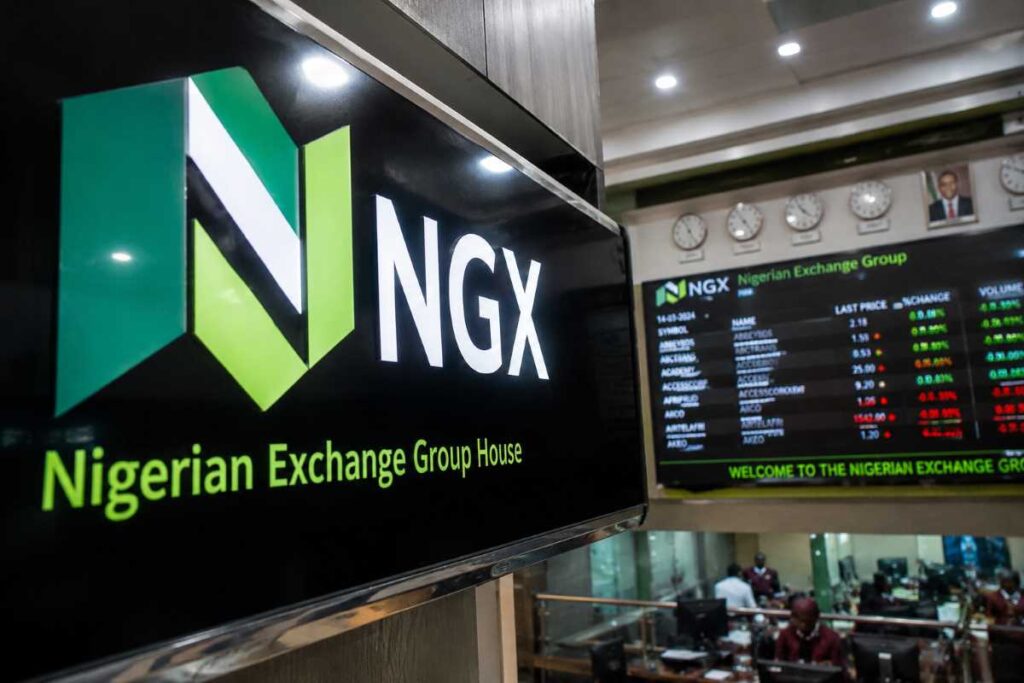
Nigerian equities extended their recent decline during the week ended Friday, September 11, with the NGX All-Share Index falling about 1.6% as investors sold banking, industrial and other major stocks.
The decline came despite periods of buying interest during the week, with investors continuing to reassess equities amid changing market conditions and pressure across several large-cap stocks. The market’s year-to-date gains remained substantial despite the weekly decline.
The sell-off followed a period of stronger performance on the Nigerian Exchange earlier in the year, when elevated investor demand pushed the benchmark index and market capitalisation to record levels. Recent trading sessions, however, have shown greater selling pressure.
Banks and industrial stocks were among the sectors contributing to the latest weakness. The broad-based nature of the decline indicates that the pressure was not limited to a single company or industry.
Trading activity remained significant during the week as investors repositioned their portfolios. Proshare reported that Nigerian equities had shown mixed signals during the week, with the stock market facing renewed pressure even as other parts of the financial market recorded stronger demand.
The movement in equities is taking place alongside changes in Nigeria’s fixed-income and foreign-exchange markets. Proshare said demand for government securities remained concentrated at the longer end of the Treasury-bill curve, while Federal Government bond yields declined across short-, medium- and long-term maturities.
For investors, the shift is important because returns available in government securities can influence how institutional and individual investors allocate funds between fixed-income assets and equities. When yields remain attractive, stocks can face additional competition for investor capital.
The pressure on Nigerian equities also comes as investors prepare for the opening of Dangote Petroleum Refinery’s public offer on September 14. The refinery is seeking to raise about ₦2.15 trillion through the offer, potentially creating another significant demand for domestic investment capital.
That upcoming offer could become an important factor in the capital market as investors decide how much of their available funds to allocate to the new issue while managing existing equity positions.
Despite the recent correction, Nigeria’s stock market remains significantly higher than it was at the beginning of the year. The immediate focus for investors will now be whether the sell-off continues into next week or whether lower prices attract fresh buying interest.