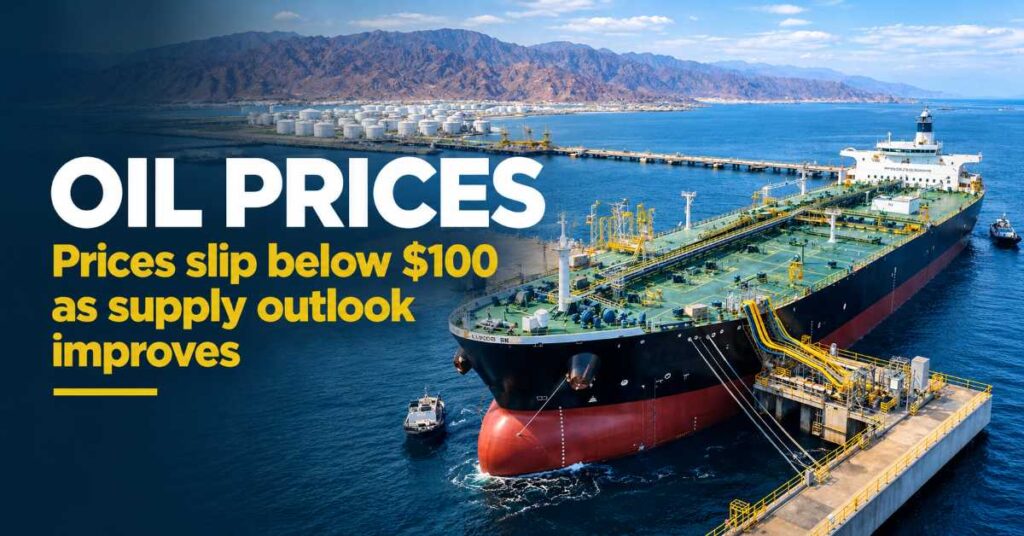
Oil prices slipped below $100 a barrel on Friday as improving crude exports from the Middle East eased some supply concerns, although China’s decision to restrict fuel exports kept pressure on already tight refined-product markets.
December Brent crude futures fell to around $99.79 a barrel during Friday trading, after settling at $102.31 on Thursday following a 4.4 per cent jump. West Texas Intermediate also fell, with the market remaining highly sensitive to developments around Middle Eastern supply and shipping.
The retreat came as more Middle Eastern crude began reaching the market. Reuters reported that a healthier Saudi export picture was helping offset concerns about renewed tensions in the region. Brent was trading at $101.61 a barrel at 0635 GMT in another Reuters market update, showing the sharp intraday volatility around the $100 threshold.
At the same time, China has suspended exports of oil products to destinations outside Hong Kong and Macau for October, according to people familiar with the matter. The move is intended to preserve domestic fuel stocks and could remain in place after China’s week-long holiday, depending on inventories and refinery output.
The Chinese restrictions are particularly significant for refined products rather than crude oil. Asia’s gasoline refining margins rose above $50 a barrel over Brent after the export suspension, while fuel inventories in some importing markets have come under pressure.
The supply picture remains complicated. Crude exports from the Middle East have been recovering, but refined-product flows remain below normal following disruptions to refinery infrastructure. Russia has also extended restrictions on diesel exports, adding to concerns over global fuel availability.
For Nigeria, the movement in global crude prices remains important because oil exports are a major source of government revenue and foreign-exchange earnings. The country’s 2026 budget was based on a benchmark crude price of $64.85 a barrel and production of 1.84 million barrels per day.
Recent NNPC results also show why the price environment matters. The company reported that its 2025 revenue fell 24 per cent to ₦34.5 trillion, with lower crude prices among the factors cited, even as improved operations helped lift profit after tax to ₦7.2 trillion.
The market is therefore watching two opposing forces: recovering crude supply is pulling prices lower, while shortages of refined products and continuing geopolitical risks are keeping a floor under the market. The $100 level remains an important reference point as traders assess whether supply conditions will continue improving or tighten again.