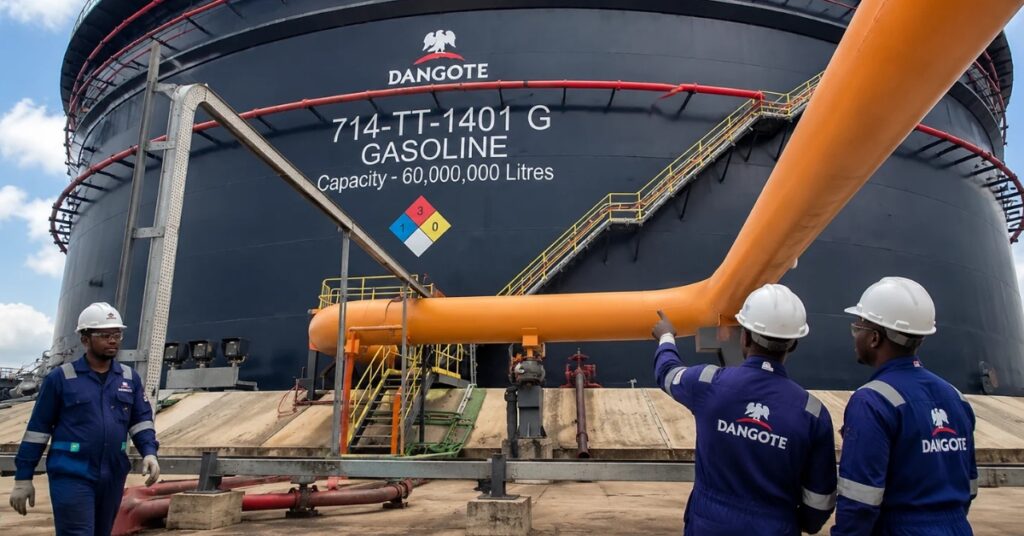
Dangote Petroleum Refinery has stopped selling petrol to major marketers that import the product, opening a new phase in the dispute over the role of imported fuel in Nigeria’s increasingly domestic refining-led petrol market.
Refinery officials confirmed the decision on Tuesday, October 6, saying Dangote is prioritising marketers that do not import petrol. The refinery’s position is that some marketers could mix its petrol with imported products after taking delivery, potentially making it difficult to establish the source and quality of the fuel sold to consumers.
A refinery official, who spoke anonymously because he was not authorised to speak publicly, said Dangote was no longer selling petrol to marketers involved in imports. Another source said the refinery was instead prioritising members of the Independent Petroleum Marketers Association of Nigeria and other marketers that do not import the product.
The decision places another layer of pressure on fuel marketers that have historically relied on imports as an alternative source of supply. It also comes at a time when domestic refineries are supplying a growing share of Nigeria’s petrol, while regulators continue to keep imports available as a safeguard against supply shortages.
The Nigerian Midstream and Downstream Petroleum Regulatory Authority approved petrol import permits covering about 830,000 metric tonnes for the fourth quarter of 2026. The permits were issued to six marketers, including Matrix Energy, A.A. Rano, AYM Shafa, NIPCO, Pinnacle Oil and Bono Energy.
That creates an increasingly important tension in the downstream market. Dangote Refinery has argued for greater reliance on locally refined petrol, while the regulator has maintained that imports can provide a supply buffer and support competition. A Federal High Court ruling in September also ordered NMDPRA to continue issuing and renewing import licences for Matrix Energy, A.A. Rano and AYM Shafa, provided they meet the applicable requirements.
The disagreement is therefore no longer simply about where Nigeria gets its petrol. It is also about how the market should function as domestic refining capacity expands: whether imports should remain a normal source of competition and supply, or increasingly serve only as a fallback when local production cannot meet demand.
For marketers, the issue is practical. Those unable to buy directly from Dangote while also facing restrictions on importing could have fewer options for sourcing petrol. Independent marketers, meanwhile, have indicated that they remain focused on obtaining products at competitive prices and can source from either domestic refineries or importers depending on market conditions.
The development also raises a broader question for consumers. Nigeria’s shift towards domestic refining was expected to reduce dependence on imported petrol, but maintaining competition and ensuring adequate supply remain important in a deregulated market. The continued issuance of import permits shows that the government has not yet concluded that domestic production can entirely replace imports.
Dangote’s latest decision is therefore likely to keep the dispute over petrol imports, competition and domestic refining at the centre of Nigeria’s downstream petroleum market. With the refinery expanding its role in domestic supply while import licences remain available, the next stage of the dispute could help determine how Nigeria’s petrol market is structured in the years ahead.