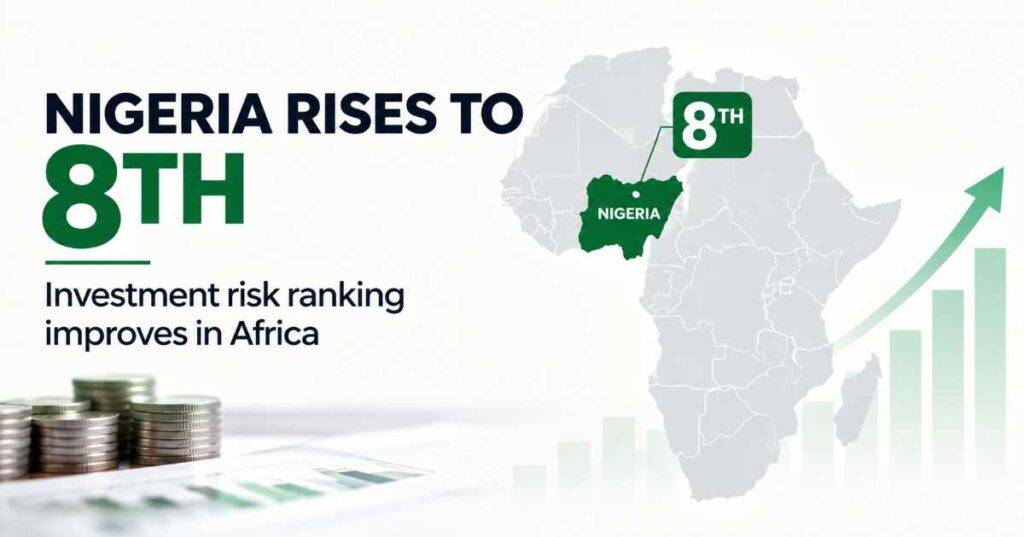
Nigeria has risen four places to eighth in Bloomberg Economics’ 2026 Investment Risk-O-Meter, making it the biggest climber among the 19 African economies assessed in the latest ranking.
The improvement moved Nigeria ahead of Rwanda, Tanzania, Kenya and Namibia, with Bloomberg attributing the country’s stronger position to gains in three of the five indicators used in its assessment: economic strength, fiscal strength and external vulnerability.
The ranking, published as part of Bloomberg’s 2026 Investor’s Guide to Africa, provides a relative assessment of investment risk across selected African economies. Mauritius took the top position, while South Africa, which led the previous ranking, slipped to second.
Nigeria’s improvement comes after a period of significant changes to its economic policy framework. The government has removed the petrol subsidy, reformed the foreign-exchange market and changed electricity tariffs as part of efforts to address longstanding fiscal, currency and power-sector weaknesses.
Those reforms have also come with substantial adjustment costs for businesses and households. Higher energy and transportation costs, inflation and pressure on household purchasing power have remained significant concerns even as economic activity has continued to expand.
Nigeria’s economy grew by 3.85 per cent in 2025 and expanded by 3.89 per cent in the first quarter of 2026, according to figures cited in reporting on the Bloomberg assessment. The stronger growth performance has contributed to the broader improvement in Nigeria’s macroeconomic indicators.
The ranking nevertheless does not remove some of the challenges investors face in Nigeria. Public debt remains substantial, with the Debt Management Office reporting total public debt of ₦159.28 trillion at the end of 2025. The DMO has also published more recent debt data covering June 2026, underscoring that fiscal conditions remain an important issue for investors.
For businesses and investors, Nigeria’s movement up the ranking is therefore better understood as an improvement in its relative position rather than a declaration that investment risks have disappeared. The country is competing with other African markets whose own economic conditions are changing, meaning its position can improve even while domestic challenges remain.
That distinction matters because investment decisions depend on more than macroeconomic indicators. Companies considering Nigeria still have to assess foreign-exchange conditions, infrastructure, taxation, regulation, financing costs, security and the ability to repatriate returns.
Nigeria’s four-place rise nevertheless gives investors another signal to consider as they reassess the country’s economic trajectory. The more important test will be whether the improvements captured by the Bloomberg assessment translate into stronger private investment and a more predictable operating environment for businesses.
For Nigeria, the latest ranking therefore represents a better relative position in Africa’s investment landscape—but sustaining that progress will depend on whether the economic reforms behind the improvement continue to strengthen the conditions businesses and investors encounter on the ground.