Brent crude has climbed above $100 a barrel for the first time since July as escalating conflict in the Middle East threatens global oil supplies, creating both potential gains and fresh risks for Nigeria’s oil-dependent economy.
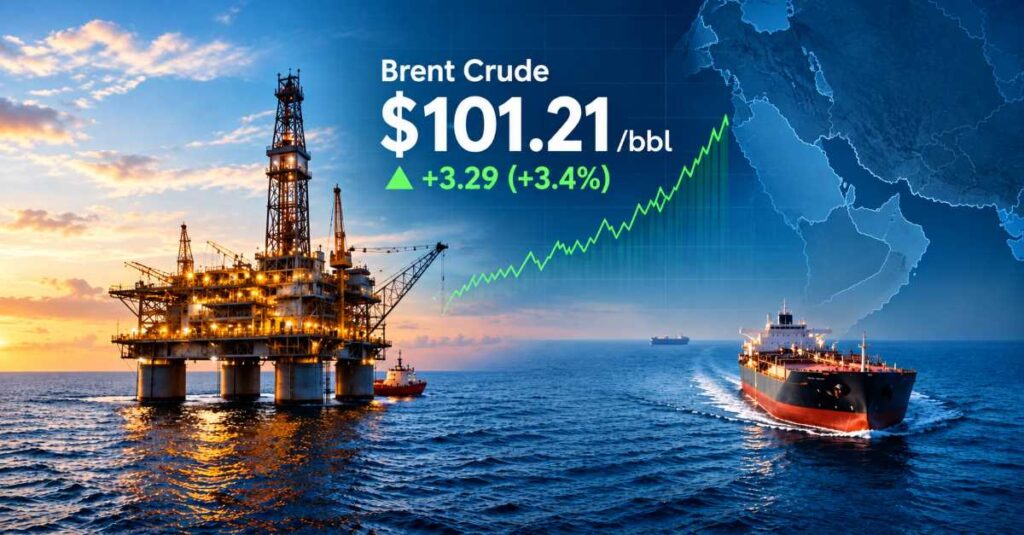
Brent futures settled at $101.21 a barrel on Wednesday, September 9, after rising $3.29, or 3.4 percent. The U.S. West Texas Intermediate benchmark settled at $96.05. Both benchmarks reached their highest closing levels since May.
The latest increase followed a sharp escalation in attacks involving the United States and Iran, including attacks on oil tankers around the Strait of Hormuz. The waterway normally carries a significant share of global oil and gas supplies, but oil flows through it have fallen sharply during the conflict.
Reuters reported that flows through the Strait had recently dropped below 2 million barrels per day, compared with roughly 8 million to 9 million barrels per day in the week before fighting resumed on August 30. Further attacks on shipping could put additional pressure on global supplies.
The situation has also spread beyond the Strait of Hormuz. Iran-backed Houthi forces have attacked Saudi energy facilities, raising concerns that disruption could affect both Gulf production and alternative shipping routes through the Red Sea.
For Nigeria, higher crude prices could provide a potential boost to government oil revenue and foreign-exchange earnings if Nigerian production and exports remain stable. But the benefit is not automatic. Nigeria’s gains depend on how much crude the country produces and exports, the quality and price of its crude, and the extent to which higher global energy costs feed into domestic prices.
Higher international oil prices can also increase the cost of imported petroleum products and other energy-intensive goods. Nigerian businesses that depend on diesel, transport, shipping and imported inputs could therefore face higher operating costs even as the country benefits from stronger crude prices.
The global impact is already extending beyond the oil market. Reuters reported that falling inventories and disrupted Middle Eastern supplies have increased concerns about inflation, while higher energy costs could complicate decisions by central banks on interest rates.
The immediate question for Nigeria is therefore whether higher crude prices will translate into stronger public revenue and foreign-exchange inflows without creating another wave of cost pressures for businesses and consumers.
Brent’s move above $100 is being closely watched because a prolonged disruption would have consequences far beyond the oil market. For Nigerian businesses and investors, the key variables to monitor are crude production, export volumes, fuel prices, the naira and the duration of the Middle East supply disruption.