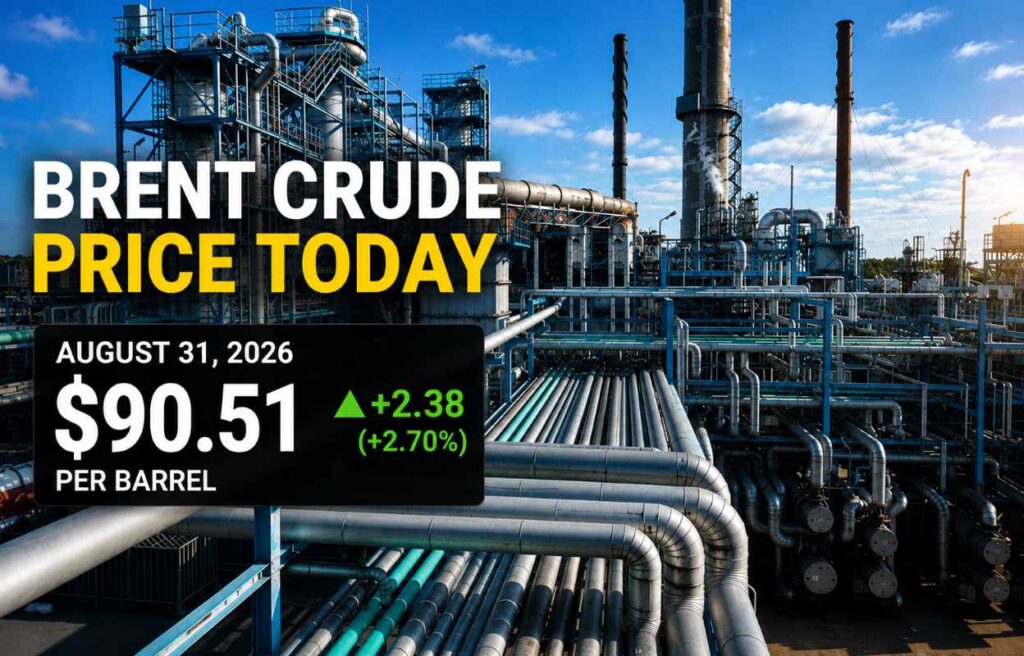
Brent crude climbed above $90 a barrel on Monday after renewed military action between the United States and Iran raised fresh concerns about oil supplies and shipping through the Strait of Hormuz, creating both potential gains and new risks for Nigeria’s economy.
Brent futures rose 2.7% to $90.51 a barrel, while US West Texas Intermediate crude also gained as markets reacted to the latest escalation in the Middle East. Asian shares declined and bond yields rose as investors assessed the potential inflationary impact of higher energy prices.
The latest escalation followed US strikes on Iranian installations near the Strait of Hormuz and retaliatory attacks by Iran on US bases in Jordan. The developments have increased concerns about the security of one of the world’s most important oil transit routes.
The Strait of Hormuz is particularly important to global energy markets because large volumes of crude and petroleum products pass through the waterway. Disruptions to shipping can therefore quickly affect crude prices, freight costs and the availability of refined petroleum products in importing markets.
For Nigeria, higher crude prices could provide a boost to government oil revenues and foreign-exchange earnings if the country’s production and exports remain strong. Oil remains an important source of Nigeria’s external earnings, making international crude prices an important factor for the country’s fiscal and foreign-exchange position.
The benefit, however, is not guaranteed. Higher global oil prices can also increase the cost of petroleum products, shipping and other imported goods, particularly if the disruption affects refined-product supplies and freight routes.
The effect could be particularly important for Nigerian businesses that depend on diesel, petrol, imported equipment or goods transported through international supply chains. Higher energy and logistics costs can eventually feed into operating expenses and consumer prices.
The latest rise is also adding to inflation concerns globally. Reuters reported that financial markets have increased expectations of tighter monetary policy as investors assess the possibility that higher energy prices could prolong inflation.
Nigeria’s position is therefore more complicated than simply benefiting from an oil-price increase. Higher crude prices could strengthen export earnings and government revenue, while a prolonged energy shock could increase costs for businesses and consumers.
The direction of oil prices will now depend heavily on developments around the Strait of Hormuz, the broader US-Iran conflict and the ability of oil shipments to move through the region without further disruption.